Best AI Scribe for Physiotherapists 2026: Assess Scribeberry
Find the best AI scribe for physiotherapists in 2026. Assess Scribeberry against templates and dictation with a clinical note, privacy and EMR checklist.
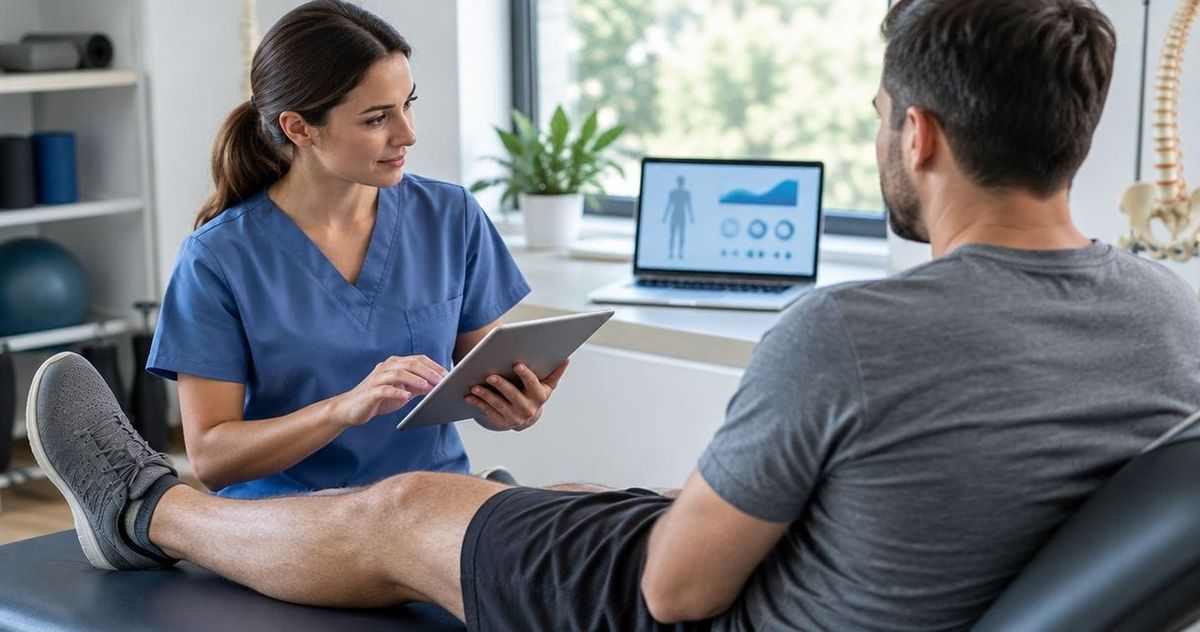
Best AI scribe to evaluate for physiotherapy in 2026: Scribeberry. It turns patient conversations into clinical notes, letters and forms, but its fit for physiotherapy depends on what you confirm in a live documentation test. If you need a workflow you can assess without selecting an AI scribe, compare structured templates and clinician-edited dictation alongside it.
- Scribeberry is the AI scribe to assess for physiotherapists because it generates notes, letters and forms from patient conversations.
- The best AI scribe for physiotherapists must capture clinical reasoning and leave the clinician in control of the final record.
- Test a real physiotherapy note, a letter and a form before deciding whether an AI scribe fits your workflow.
- Structured templates and clinician-edited dictation are useful comparators, but neither is an ambient AI scribe.
Why this matters
A physiotherapy note has to show more than what the patient said. It must distinguish reported symptoms from examination findings, record the clinician's assessment, and make the treatment plan understandable to the next reader. A fluent summary can still be an unusable clinical record if it blurs those distinctions.
That is the test for an AI scribe in 2026. The useful question is not whether a tool produces polished prose. It is whether you can verify its account of the encounter, correct it efficiently, and place the approved result in the right clinical record.
The Scribeberry medical scribe is the only named AI scribe in the information available for this guide. The other ranked entries below are documentation workflows, not competing AI scribe products. Treat the ranking as a decision aid for your next workflow test, not a claim that other vendors were assessed or ruled out.
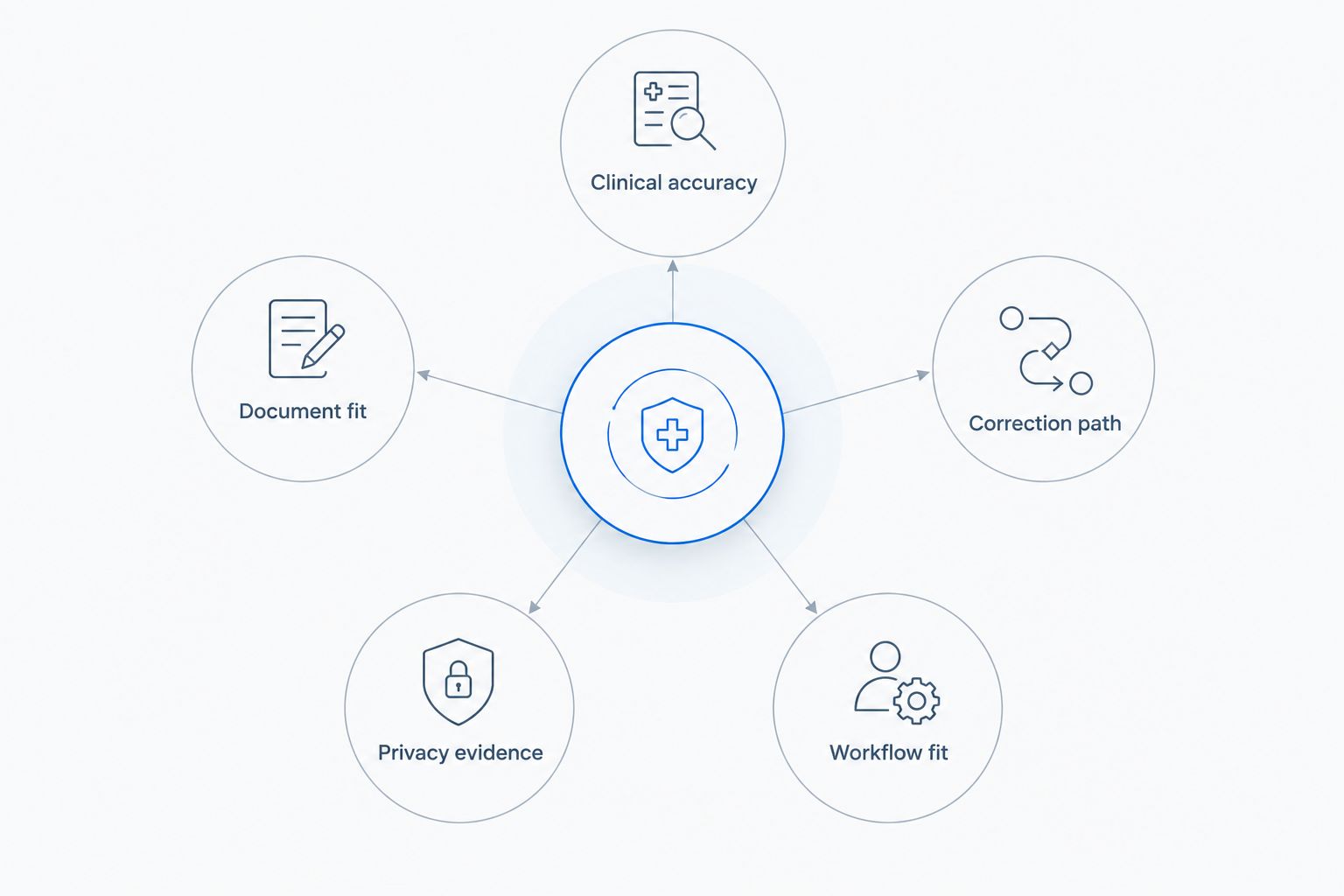
What makes the best AI scribe for physiotherapists?
Use the same encounter and the same review checklist for every option you assess in 2026. Do not award a pass because the note sounds plausible; check whether each clinically important statement can be traced to the conversation or to your own findings.
- Clinical accuracy: Separate patient-reported history, objective findings, assessment and plan. Flag any statement you did not say or verify.
- Correction path: Confirm that you can edit or discard generated text before it becomes part of the record. Your review remains necessary even when the draft looks complete.
- Workflow fit: Check the actual path from encounter to approved note in your clinic's EMR. A named EMR in a product description does not establish how your clinic's configuration works.
- Document fit: Test the outputs you use, such as visit notes, letters and forms. A satisfactory visit note does not prove that another document format is ready to use.
- Privacy evidence: Request current documentation for the recording, processing, storage, retention and deletion of patient information. Confirm which requirements apply in your province and practice setting rather than inferring compliance from a product label.
- Clinical control: Check whether you can identify omissions, preserve uncertainty and reject unsupported language before signing. The clinician, not the draft, owns the final clinical judgment.
A simple test set is 1 encounter, 3 document formats and a separate review of every clinical claim. Those figures describe a suggested evaluation, not a measured product result. Choose an encounter that includes subjective history, examination findings and a plan; then check whether the note, letter and form each preserve the facts appropriate to that document.
Physiotherapy documentation options at a glance
The table compares workflow choices, not three AI scribe vendors. No price or feature comparison between vendors is implied.
| Option | Best for | Distinguishing approach | Key limitation to assess |
|---|---|---|---|
| Scribeberry | Clinicians testing an ambient AI scribe | Converts patient conversations into notes, letters and forms | Physiotherapy-specific output and the clinic's EMR workflow need a live check |
| Structured templates | Clinicians who want a fixed note structure | Clinician enters findings into defined sections | You still enter and edit the content |
| Clinician-edited dictation | Clinicians who prefer speaking a draft | Clinician dictates, then reviews the text | Dictation alone does not establish that findings are sorted into the right sections |
What to put through the same test
Pick a representative appointment rather than a demonstration built around ideal input. Include a change in symptoms, a finding that affects the plan, and an uncertainty you would document rather than resolve prematurely. Compare each resulting record with your own account of the encounter.
Record the corrections you make. Separate missing facts from incorrect facts, misplaced facts and wording changes. That distinction tells you whether the workflow needs a better template, a different way of capturing the encounter, or closer review before the note enters the EMR. Do not turn a quick edit into an accuracy claim; the test is about fitness for your own clinical process.
1. Scribeberry: best AI scribe to assess for multi-document work
Scribeberry is an ambient medical scribe app that turns patient conversations into clinical notes, letters and forms. Its description identifies doctors, nurses and other healthcare providers as users and names Epic, Cerner and Jane App among the EMRs used by those providers. Those statements make Scribeberry a relevant evaluation candidate; they do not establish physiotherapy-specific performance or an integration with your particular EMR setup.
For a physiotherapy trial, start with the clinical note. Check whether the draft keeps the patient's account distinct from your examination and assessment. Then ask for a letter and a form based on the same encounter, and review each document against its own purpose. Do not assume a finding suitable for the chart belongs in every letter or form.
Scribeberry pros:
- The stated workflow covers notes, letters and forms rather than a visit note alone.
- Ambient capture gives you a way to assess documentation from the patient conversation instead of beginning with a blank document.
- The named EMRs give you concrete systems to raise when checking your own workflow.
Scribeberry cons and checks:
- The supplied description does not establish how well a draft separates physiotherapy history, examination, assessment and plan. Test that with your own encounter.
- The supplied description does not specify the route into your EMR configuration. Confirm the steps before treating it as a workflow fit.
- Privacy handling and retention need current documentation appropriate to your practice. Do not infer those details from the product category.
Best for: A physiotherapist who wants to assess whether one ambient scribe can support several kinds of clinical document without surrendering final review.
Verdict: Hold until a live encounter, document review and privacy check confirm the fit. A readable draft alone is not an approval criterion.
2. Structured templates: best for a fixed note structure
A structured template is a documentation method, not an AI scribe. You decide which headings and prompts belong in a visit note, then enter the findings and plan yourself. It is a useful comparator because it shows what your clinic gains or loses when it moves away from a controlled note structure.
Build the comparison around the sections you actually need. For example, keep patient-reported symptoms apart from examination findings, and place clinical interpretation in the assessment rather than presenting it as an observed fact. If a section does not apply, document that decision according to your clinic's process rather than filling it with generic language.
Structured-template pros:
- You control the headings and the placement of clinical findings.
- You can see which required sections remain incomplete before finalizing the record.
- You can use the template as a consistent benchmark when reviewing an AI-generated draft.
Structured-template cons:
- The clinician still has to enter the content and check it.
- Fixed prompts can produce repetitive text if you fill them mechanically instead of documenting the actual encounter.
- A note template does not, by itself, prepare a separate letter or form.
Best for: A clinician whose main problem is inconsistent note organization rather than capturing the conversation.
Verdict: Hold as the baseline for your AI scribe test. Keep the template if it produces a clearer approved record for your workflow; do not call it an AI scribe substitute when the task is ambient capture.
3. Clinician-edited dictation: best for speaking your own draft
Clinician-edited dictation is another non-AI-scribe workflow comparator. You speak the content you want recorded and then review the resulting text. Unlike ambient capture of a patient conversation, this method asks you to formulate the note yourself.
Use the same encounter when comparing dictation with an ambient draft. Can you state the assessment and plan clearly while preserving uncertainty? Does the text put objective findings where a later reader expects them? Review the final record, not the ease of creating an initial paragraph.
Clinician-edited dictation pros:
- You choose which clinical details to include while you speak the draft.
- You can state your clinical reasoning explicitly rather than asking a tool to infer it from a conversation.
- It provides a direct comparison for clinicians who already prefer verbal documentation.
Clinician-edited dictation cons:
- You must organize the content you dictate; speaking a narrative does not automatically create a structured note.
- The text still needs review for omissions, transcription errors and clinical meaning.
- Creating a separate letter or form remains a distinct task unless your workflow supports it.
Best for: A physiotherapist who prefers to compose the clinical record verbally and wants direct control over its wording.
Verdict: Hold as a comparator. Select it over ambient capture only if the approved documentation works better for your practice after review.
How to make the decision in your clinic
For a 2026 selection, review the approved output and the steps required to approve it. Do not compare an untouched AI draft with a fully edited template note. That compares different stages of work.
Use this sequence:
- Choose the encounter. Select a visit with a subjective account, examination findings, an assessment and a plan.
- Define the required record. List what the note, letter or form must communicate and who will read it.
- Create the drafts. Use the workflow you are assessing, subject to your clinic's privacy and consent requirements.
- Mark every correction. Identify unsupported statements, omissions, misplaced findings and changes needed for clarity.
- Check the destination. Confirm how the reviewed document reaches the correct patient record in your actual EMR setup.
- Approve or reject. Sign only the document that reflects your clinical judgment and your practice's requirements.
The point is to expose errors that fluent writing hides. A generated assessment that sounds clinical but states a conclusion you did not reach needs correction. So does a letter that includes detail you would keep in the chart but not send to its recipient.
How this ranking works
This is a 2026 workflow ranking by documented function and clinical use case, not a head-to-head test of AI scribe vendors. Scribeberry is first because it is the only AI scribe named in the supplied product information and its stated outputs include notes, letters and forms. Structured templates and clinician-edited dictation follow because they give you practical baselines for judging a proposed change.
The ranking does not assign performance scores, time savings, privacy certifications or vendor limitations. Those claims require current primary-source documentation and, for workflow fit, a check in your own clinical environment. It also does not mean that other AI scribes are unsuitable; they are outside the evidenced comparison on this page.
Which documentation option should you choose?
Assess Scribeberry first if you want an ambient AI scribe for physiotherapy documentation. Make the decision only after reviewing a physiotherapy note and any letter or form you expect to produce. Confirm the privacy terms and the route into your clinical record before using the workflow with patient information.
Choose a structured template when the immediate problem is where findings belong. Use clinician-edited dictation as a comparison when speaking a draft already suits your clinical reasoning. Neither workflow turns a patient conversation into an ambient draft, and neither removes your obligation to check the final record.
If your team documents across disciplines, compare note requirements rather than copying one specialty's format into another. The family medicine AI scribe guide provides a separate specialty context; your physiotherapy assessment still needs its own clinical checklist.
FAQ
What is the best AI scribe for physiotherapists in 2026?
Scribeberry is the named AI scribe to evaluate in this guide, not a verified winner against every vendor. Test its physiotherapy note, letter and form outputs before selecting it for your practice.
Can an AI scribe write a physiotherapy note without clinician review?
No. The clinician must review the draft for missing findings, unsupported statements and an accurate assessment and plan before approving the clinical record.
Is a structured template an AI scribe?
No. A structured template organizes the information the clinician enters; it does not serve as an ambient scribe for the patient conversation.
Is dictation the same as an ambient AI scribe?
No. In clinician-edited dictation, you compose the draft by speaking it. An ambient scribe uses the patient conversation as the source for a draft that still requires review.
Does Scribeberry work with my clinic's EMR?
Confirm that in your own setup before adoption. Scribeberry's description names Epic, Cerner and Jane App, but naming an EMR does not specify the steps required in your clinic.
What privacy checks should a Canadian physiotherapy clinic make?
Request current documentation covering patient-information capture, processing, storage, retention and deletion. Check the applicable provincial and practice requirements before using any proposed workflow with patient information.
What should I test before choosing a physiotherapy AI scribe?
Test a representative encounter and review the resulting note against the patient history, examination, assessment and plan. Check any needed letter or form separately, then verify how the approved document enters the patient record.
One last thing
Test the letter as carefully as the visit note. A draft can preserve the encounter accurately yet include the wrong detail for a document with a different reader or purpose. In a 2026 evaluation, approve each output on its own terms; do not treat a correct note as automatic approval for every document made from the same conversation.